The Best Career Pages We’re Actually Into (and Why)
Most career pages simply inform, but the best ones convince. They do this not with flashy perks or clichés, but through clarity, conviction, and a distinct sense of identity. This blog explores how companies like Superside, Pleo, Spotify, Sana, Oatly, and Voi are redefining their career pages to attract the right talent by being unapologetically themselves.

Most career pages are built to inform.
The best ones are built to convince.
And not with kombucha on tap or stock photos of people high-fiving in a meeting room. They convince with clarity. With conviction. With a sharp sense of identity.
We’ve been looking at a handful of career pages that are doing the work properly right now. Superside, Pleo, Spotify, Sana, Oatly and Voi. Different industries. Different tones. Same underlying pattern. They know exactly who they are, and they’re not trying to attract everyone.
That’s the shift.
Superside
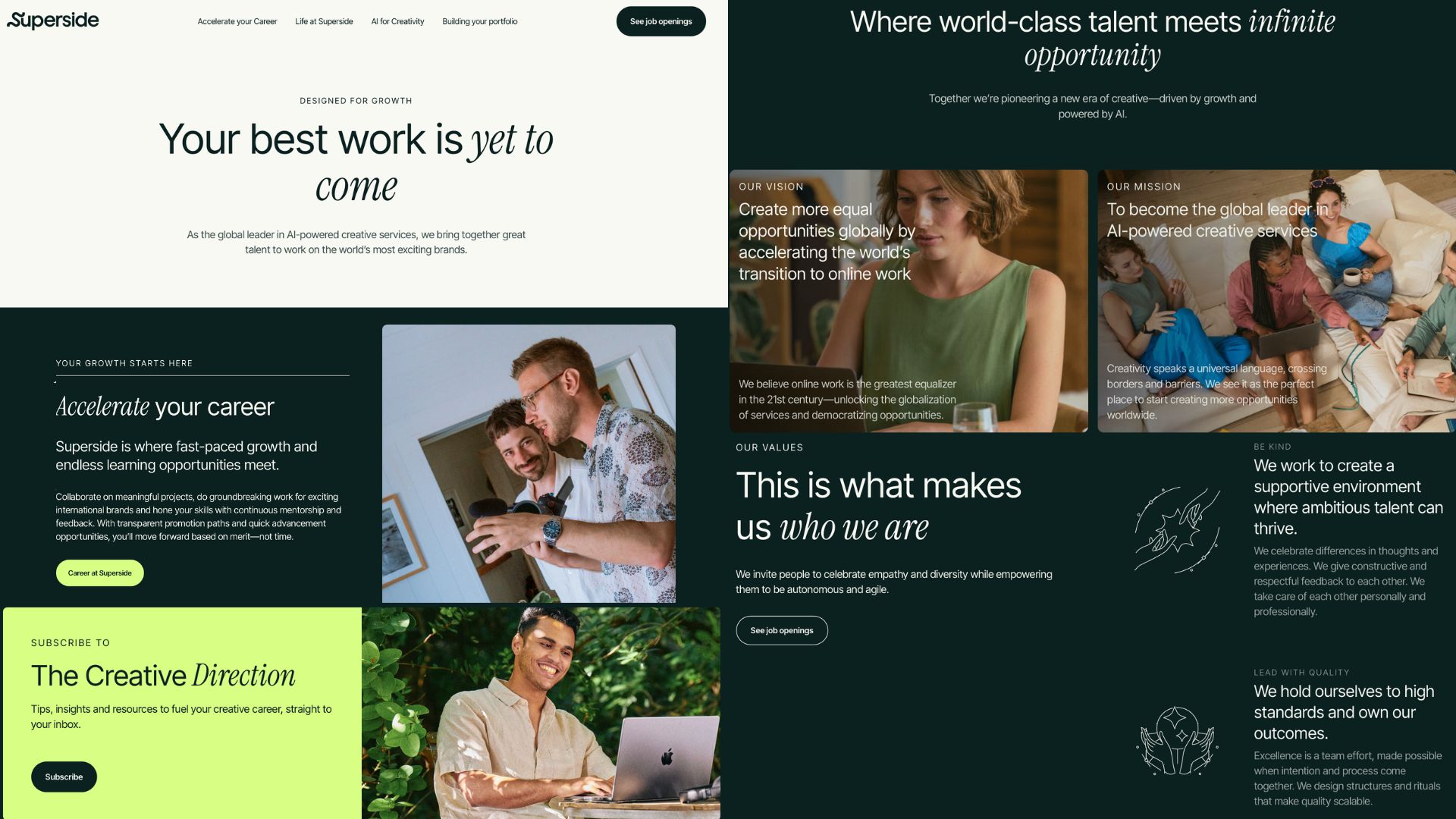
When you check out Superside, the first thing that hits you is the ambition radiating from their career page. It’s remote-first, global, and performance-driven. This isn’t just about job listings; it’s a bold statement of who they are and who they want to attract. Instead of simply saying, “Here are our openings,” they’re more focused on asking, “Are you the kind of builder who thrives in this environment?” It’s not just about browsing roles. It’s about figuring out if you can see yourself fitting into this high-energy tribe.
Pleo
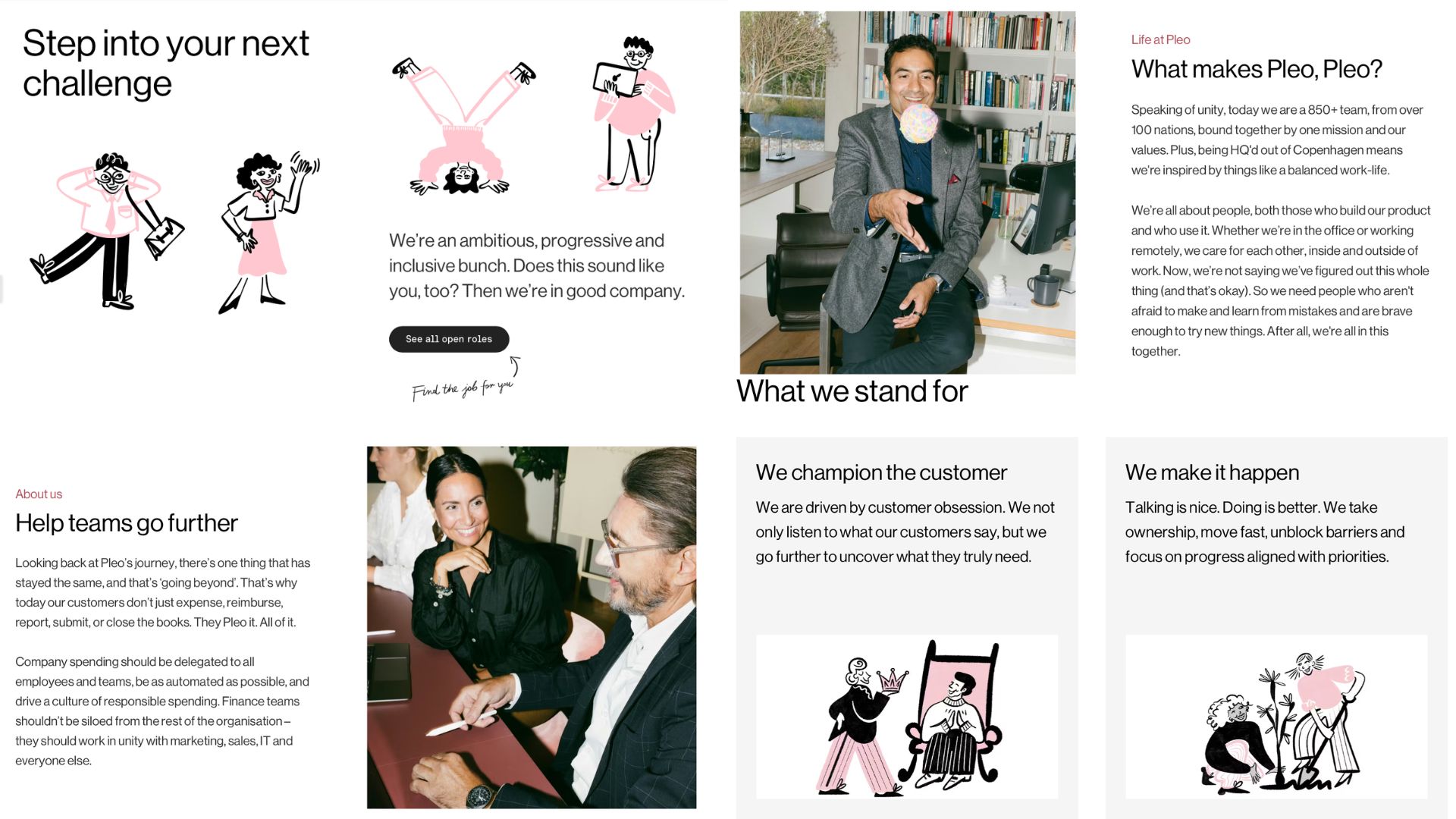
In contrast, Pleo offers a different vibe. Their tone is warm and confident, cutting through the usual corporate jargon with clarity about their values. You quickly grasp what they believe in and how they operate, steering clear of any fluffy culture talk. This straightforward approach allows candidates to self-select in or out in no time. It’s refreshing and effective, making the hiring process feel genuine rather than transactional.
Spotify
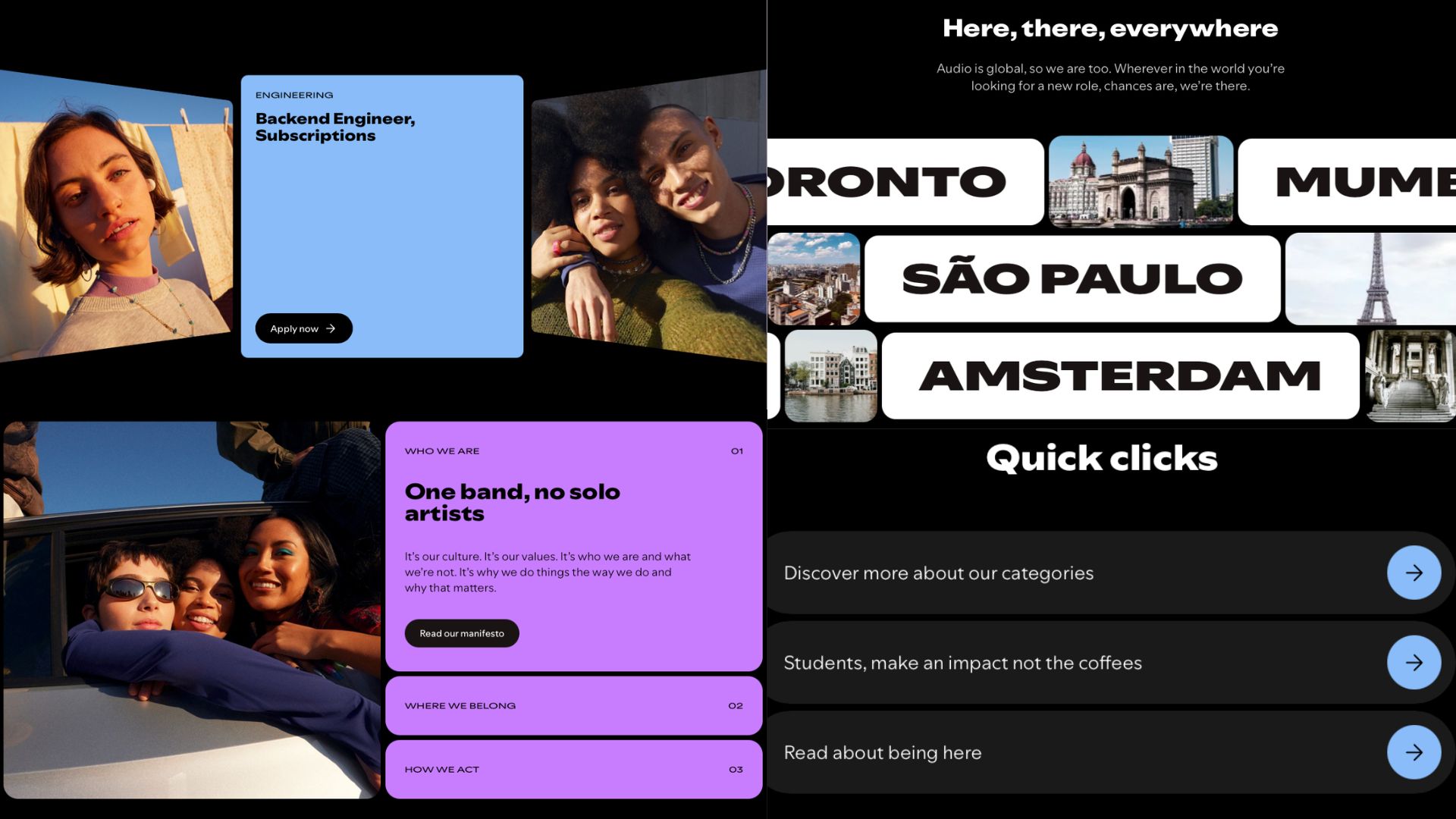
Then there’s Spotify, which takes it a step further. Their career page feels less like a job board and more like a living ecosystem. They dive deep into topics like flexibility, growth, and belonging, providing real substance instead of catchy slogans. It’s a reflection of a company that understands how work integrates into life, and they’re comfortable sharing that thought process. You walk away feeling like they truly care about the entire person, not just the resume.
Sana
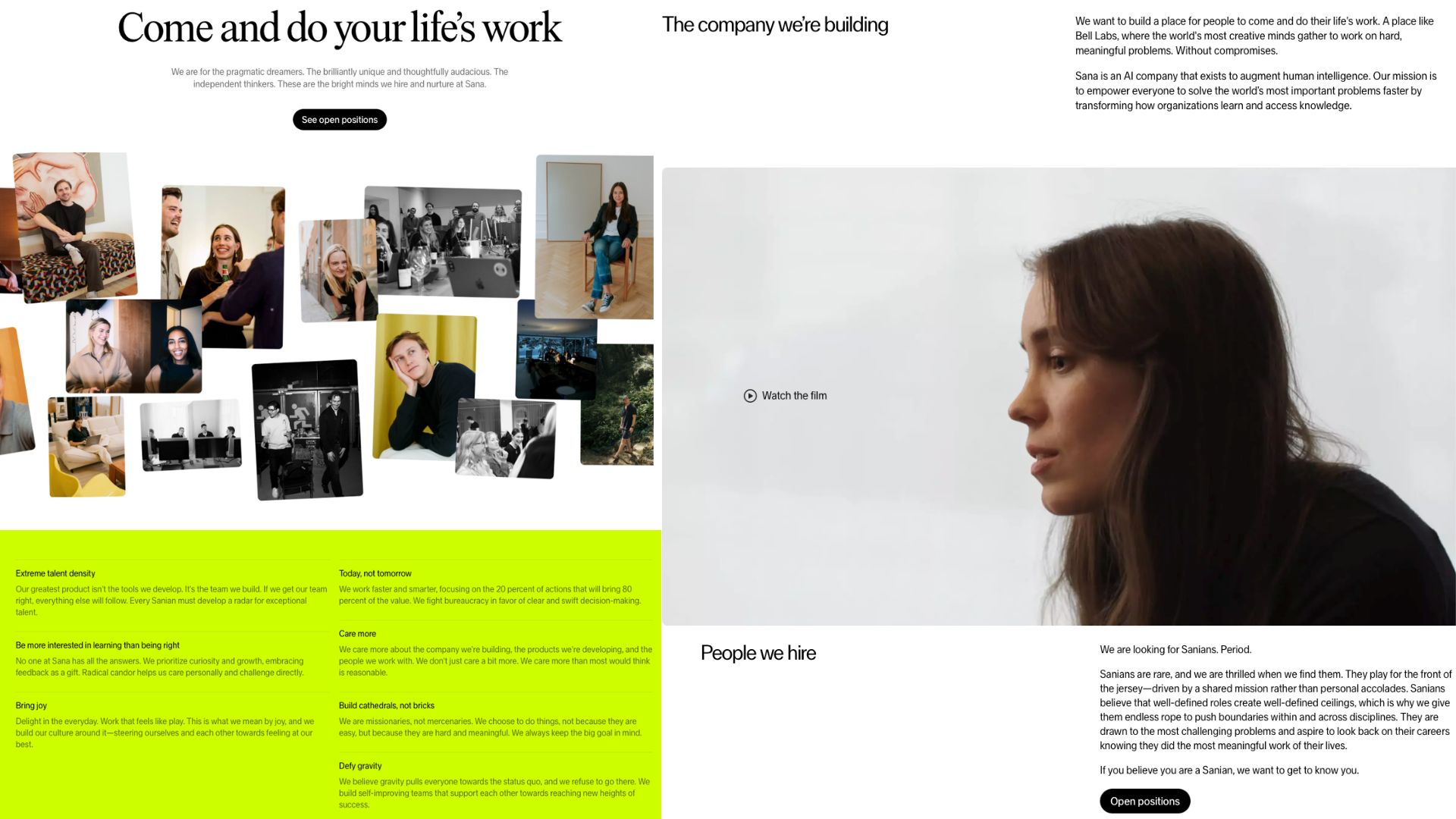
On the other hand, Sana presents a sharper, more ambitious tone. It’s clear they’re building for a high-caliber audience, and their mission-first approach is unapologetic. This clarity serves an essential purpose: it filters out those who aren’t ready to step up to the plate. When you read their career page, it’s evident they’re looking for top-tier talent who can operate at a high level.
Oatly
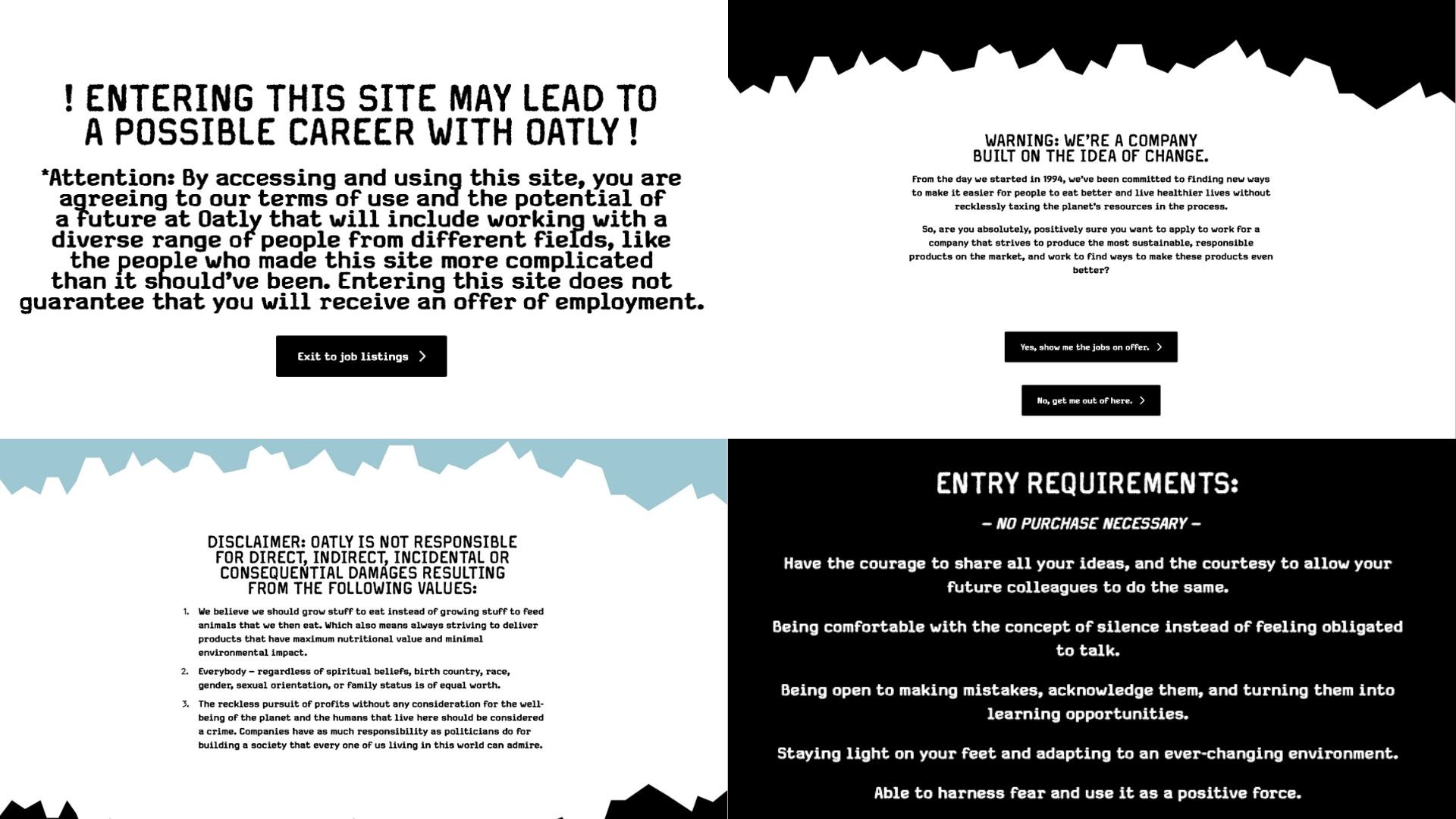
Oatly, however, leans fully into its quirky and opinionated voice. You can feel their brand in every sentence, showcasing a consistency that matters. If your product is bold, but your career page feels like a legal document, something’s off. Oatly effectively demonstrates that employer branding and consumer branding shouldn’t exist in separate universes. they should resonate together.
Voi
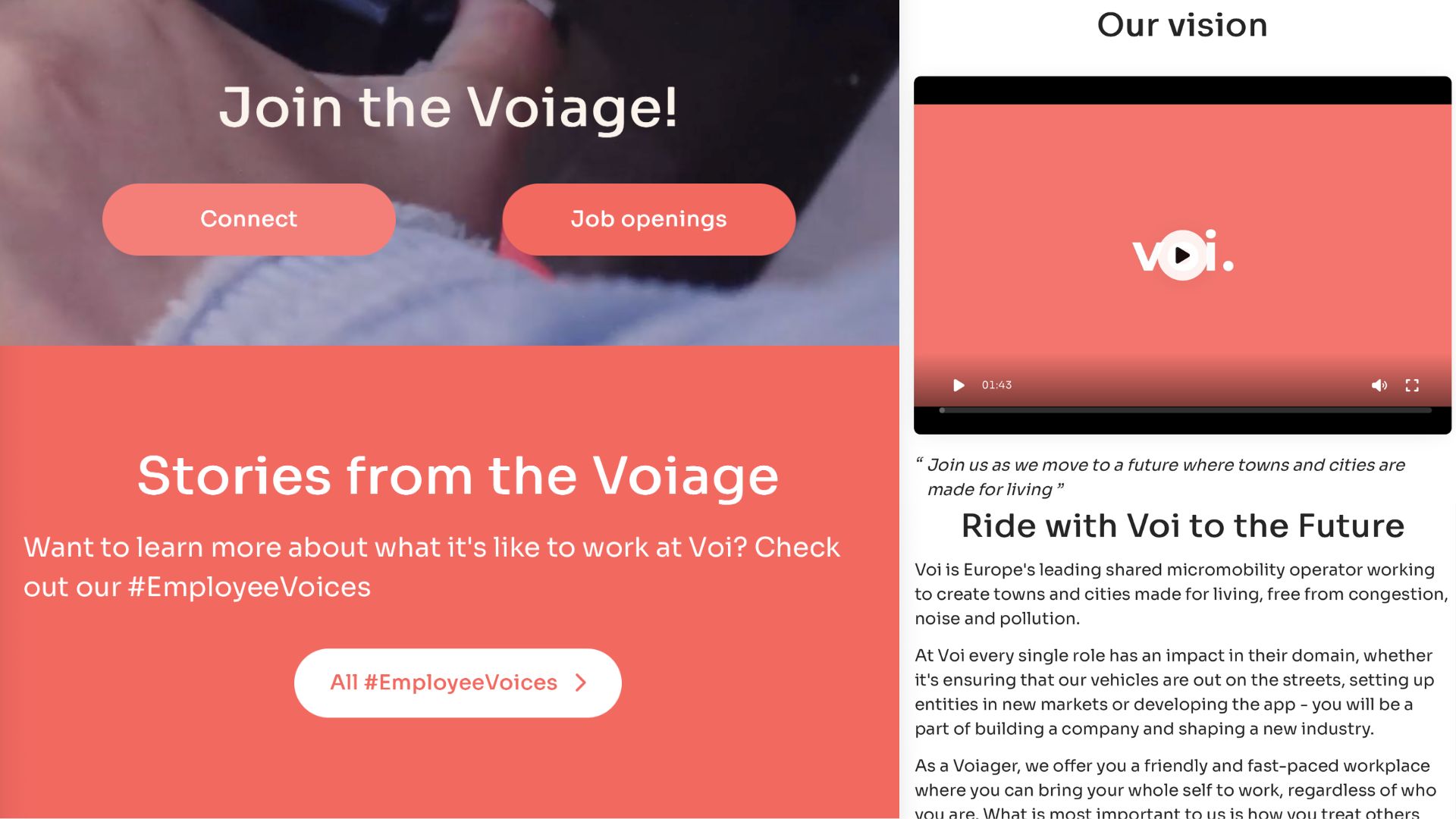
Finally, Voi strikes a balance with a clean, modern, and mobile-friendly design. Their structure makes it easy to navigate, while the tone remains welcoming and human. You quickly grasp their mission, the pace of work, and the kind of impact you could make. It feels less like a transaction and more like an invitation to join a meaningful journey.
Across all six, the pattern is obvious.
They lead with identity before openings. They write like humans, not policy documents. They’re clear about expectations.
And they’re not afraid to say that “this isn’t for everyone”.
Your career page isn’t a formality. It’s your most scalable recruiter. It works 24/7. It shapes perception before a recruiter ever reaches out. And if it feels generic, corporate or slightly “please like us”, you’re losing strong candidates before they even scroll.
If you’re building or rebuilding your career page right now, don’t start with perks. Start with conviction. Who are you actually for? What kind of people thrive in your environment? What do you expect in return?
Clarity converts.
And the companies above aren’t winning because they’re trendy. They’re winning because they’re honest about who they are.
That’s what makes a career page do the work.
Author profile
Solvår Anine Nilssen Rusånes
Growth Marketing Manager at Amby, who loves writing about the tech, venture capital, and people space.

Ready? Let’s do it.
Get in touch to learn more about how we can help solve your talent needs.
Ready? Let’s do it.
Get in touch to learn more about how we can help solve your talent needs.
Ready? Let’s do it.
Get in touch to learn more about how we can help solve your talent needs.
The Best Career Pages We’re Actually Into (and Why)
Most career pages simply inform, but the best ones convince. They do this not with flashy perks or clichés, but through clarity, conviction, and a distinct sense of identity. This blog explores how companies like Superside, Pleo, Spotify, Sana, Oatly, and Voi are redefining their career pages to attract the right talent by being unapologetically themselves.
Most career pages are built to inform.
The best ones are built to convince.
And not with kombucha on tap or stock photos of people high-fiving in a meeting room. They convince with clarity. With conviction. With a sharp sense of identity.
We’ve been looking at a handful of career pages that are doing the work properly right now. Superside, Pleo, Spotify, Sana, Oatly and Voi. Different industries. Different tones. Same underlying pattern. They know exactly who they are, and they’re not trying to attract everyone.
That’s the shift.
Superside
When you check out Superside, the first thing that hits you is the ambition radiating from their career page. It’s remote-first, global, and performance-driven. This isn’t just about job listings; it’s a bold statement of who they are and who they want to attract. Instead of simply saying, “Here are our openings,” they’re more focused on asking, “Are you the kind of builder who thrives in this environment?” It’s not just about browsing roles. It’s about figuring out if you can see yourself fitting into this high-energy tribe.
Pleo
In contrast, Pleo offers a different vibe. Their tone is warm and confident, cutting through the usual corporate jargon with clarity about their values. You quickly grasp what they believe in and how they operate, steering clear of any fluffy culture talk. This straightforward approach allows candidates to self-select in or out in no time. It’s refreshing and effective, making the hiring process feel genuine rather than transactional.
Spotify
Then there’s Spotify, which takes it a step further. Their career page feels less like a job board and more like a living ecosystem. They dive deep into topics like flexibility, growth, and belonging, providing real substance instead of catchy slogans. It’s a reflection of a company that understands how work integrates into life, and they’re comfortable sharing that thought process. You walk away feeling like they truly care about the entire person, not just the resume.
Sana
On the other hand, Sana presents a sharper, more ambitious tone. It’s clear they’re building for a high-caliber audience, and their mission-first approach is unapologetic. This clarity serves an essential purpose: it filters out those who aren’t ready to step up to the plate. When you read their career page, it’s evident they’re looking for top-tier talent who can operate at a high level.
Oatly
Oatly, however, leans fully into its quirky and opinionated voice. You can feel their brand in every sentence, showcasing a consistency that matters. If your product is bold, but your career page feels like a legal document, something’s off. Oatly effectively demonstrates that employer branding and consumer branding shouldn’t exist in separate universes. they should resonate together.
Voi
Finally, Voi strikes a balance with a clean, modern, and mobile-friendly design. Their structure makes it easy to navigate, while the tone remains welcoming and human. You quickly grasp their mission, the pace of work, and the kind of impact you could make. It feels less like a transaction and more like an invitation to join a meaningful journey.
Across all six, the pattern is obvious.
They lead with identity before openings. They write like humans, not policy documents. They’re clear about expectations.
And they’re not afraid to say that “this isn’t for everyone”.
Your career page isn’t a formality. It’s your most scalable recruiter. It works 24/7. It shapes perception before a recruiter ever reaches out. And if it feels generic, corporate or slightly “please like us”, you’re losing strong candidates before they even scroll.
If you’re building or rebuilding your career page right now, don’t start with perks. Start with conviction. Who are you actually for? What kind of people thrive in your environment? What do you expect in return?
Clarity converts.
And the companies above aren’t winning because they’re trendy. They’re winning because they’re honest about who they are.
That’s what makes a career page do the work.
Author profile
Solvår Anine Nilssen Rusånes
Growth Marketing Manager at Amby, who loves writing about the tech, venture capital, and people space.
Ready? Let’s do it.
Get in touch to learn more about how we can help solve your talent needs.
Ready? Let’s do it.
Get in touch to learn more about how we can help solve your talent needs.
Ready? Let’s do it.
Get in touch to learn more about how we can help solve your talent needs.